-
Continue reading →: Java Team Lead Interview Question, Part 1
Question: „In your experience leading Java development teams, how do you approach ensuring code quality and maintainability across a project, especially when managing multiple developers with different levels of experience?“ Answer:
-
Continue reading →: Kommunikationsstrategie and Fähigkeiten in der Agile Softwareentwicklung
Wer hatte nie 𝗞𝗼𝗺𝗺𝘂𝗻𝗶𝗸𝗮𝘁𝗶𝗼𝗻𝘀𝘀𝗰𝗵𝘄𝗶𝗲𝗿𝗶𝗴𝗸𝗲𝗶𝘁𝗲𝗻?!Wer beschäftigt sich fast täglich mit 𝗞𝗼𝗺𝗺𝘂𝗻𝗶𝗸𝗮𝘁𝗶𝗼𝗻𝘀𝗵𝗲𝗿𝗮𝘂𝘀𝗳𝗼𝗿𝗱𝗲𝗿𝘂𝗻𝗴𝗲𝗻? Wenn es um das Thema Kommunikation und Kommunikationsfähigkeiten geht, erinnere ich ich mich an meinen ehemaligen Agile Coach Kai, der selbst ein erfahrene Kommunikationstrainer ist. Der hat mir damals in einem Gespräch gesagt: Iman, du hast gute Kommunikationsfähigkeiten. Obwohl ich…
-
Continue reading →: Software Architecture interview questions, part 2
Question: What are the key architectural, technical, and business considerations when migrating from a legacy system built on C#, VB.NET, Delphi, SQL, and PL/SQL to a modern Java-based architecture using AWS and OpenShift? Answer: When migrating from a legacy system to a modern architecture like Java, AWS, and OpenShift, key…
-
Continue reading →: Software Architect interview question, number 1
Question: Please explain how you approach designing a scalable and maintainable software architecture for a large-scale enterprise application. Answer: We should design different microservices that can communicate with each other. This way, each microservice can be maintained separately and scaled when needed. Each microservice should follow the principle of separation…
-
Continue reading →: hashCode vs. equals vs. == operator in Java
In Java, the equals() method, hashCode(), and the == operator are essential for comparing objects, but they serve different purposes and function in distinct ways. == Operator The == operator in Java checks for reference equality. It compares whether two object references point to the same memory location. For primitive…
-
Continue reading →: When to use Rest vs Messaging/Kafka in a microservice architecture
In a microservice architecture, the choice between REST and Messaging/Kafka depends on the nature of communication between services. REST is best suited for synchronous communication where real-time responses are required. It is simple, widely supported, and ideal for scenarios where one service needs to make a request and immediately get…
-
Continue reading →: Flexible architecture in Java
To ensure a flexible architecture in Java, several principles can be applied:
-
Continue reading →: OAuth vs. OpenID Connect (OIDC) vs. SAML
OpenID Connect (OIDC), OAuth 2.0, and SAML are three widely used protocols for authentication and authorization, but they serve different purposes. 1. OAuth 2.0: Authorization 2. OpenID Connect (OIDC): Authentication (Built on OAuth) 3. SAML (Security Assertion Markup Language): Authentication & Single Sign-On (SSO) Key Differences: Summary:
-
Continue reading →: Differences Monolithic and Microservice Architecture
Microservices architecture is a design style where an application is composed of small, independent services that communicate over a network. Each service focuses on a specific business capability and can be developed, deployed, and scaled independently. This approach contrasts with monolithic architecture, where the entire application is built as a…
-
Continue reading →: Circuit Breaker Design Pattern in Spring Boot Java
A circuit breaker is a design pattern used in microservices architectures to prevent cascading failures. It temporarily halts the flow of requests to a service that is consistently failing or slow, allowing the system to recover and avoid overwhelming resources. In Spring Boot, the Resilience4j library is commonly used to…
Hallo!
I’m Iman
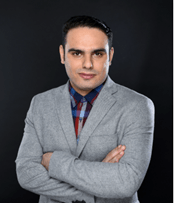
Mein Name ist Iman Dabbaghi. Ich arbeite als Senior Software Engineer in der Schweiz. Außerdem interessiere ich mich sehr für gewaltfreie Kommunikation, Bachata-Tanz und Musik sowie fürs die Persönlichkeitsentwicklung.
Ich habe einen Masterabschluss in Informatik von der Universität Freiburg in Deutschland, bin Spring/Java Certified Professional (OCP), Certified Professional for Software Architecture (CPSA-F) und ein lebenslanger Lernender 🎓.
EN:
My name is Iman Dabbaghi. I work as a Senior Software Engineer in Switzerland. I am also very interessted in nonviolent communication, Bachata dance and music and also for personal development.
I hold a masters degree in computer science from the university of Freiburg in Germany, am a Spring / Java Certified Professional (OCP), Certified Software Architecture (CPSA-F) and Life Long Learner🎓
Let’s connect
GFk Newsletter!
Jetzt die E-Mail Adresse eingeben und über die Termine benachrichtigt werden.
 Daily Blog